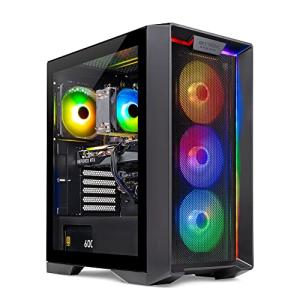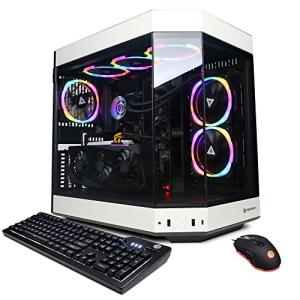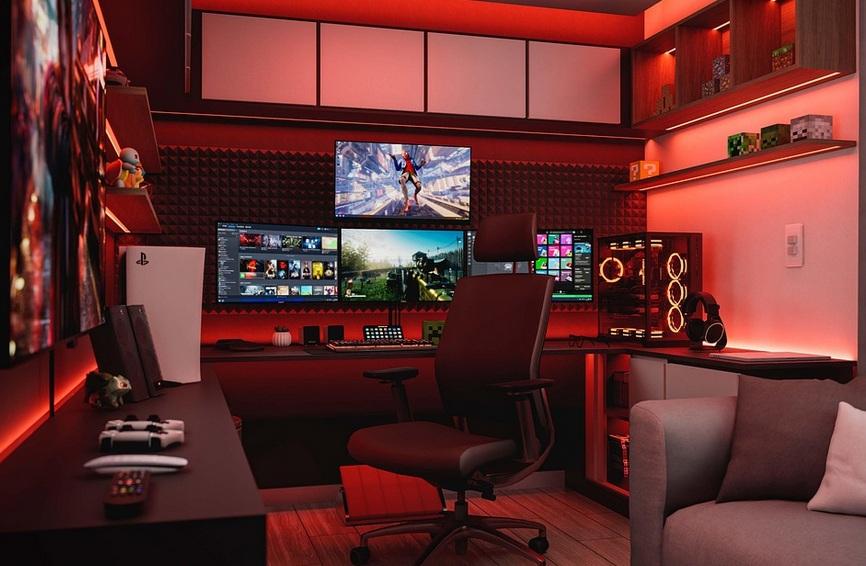
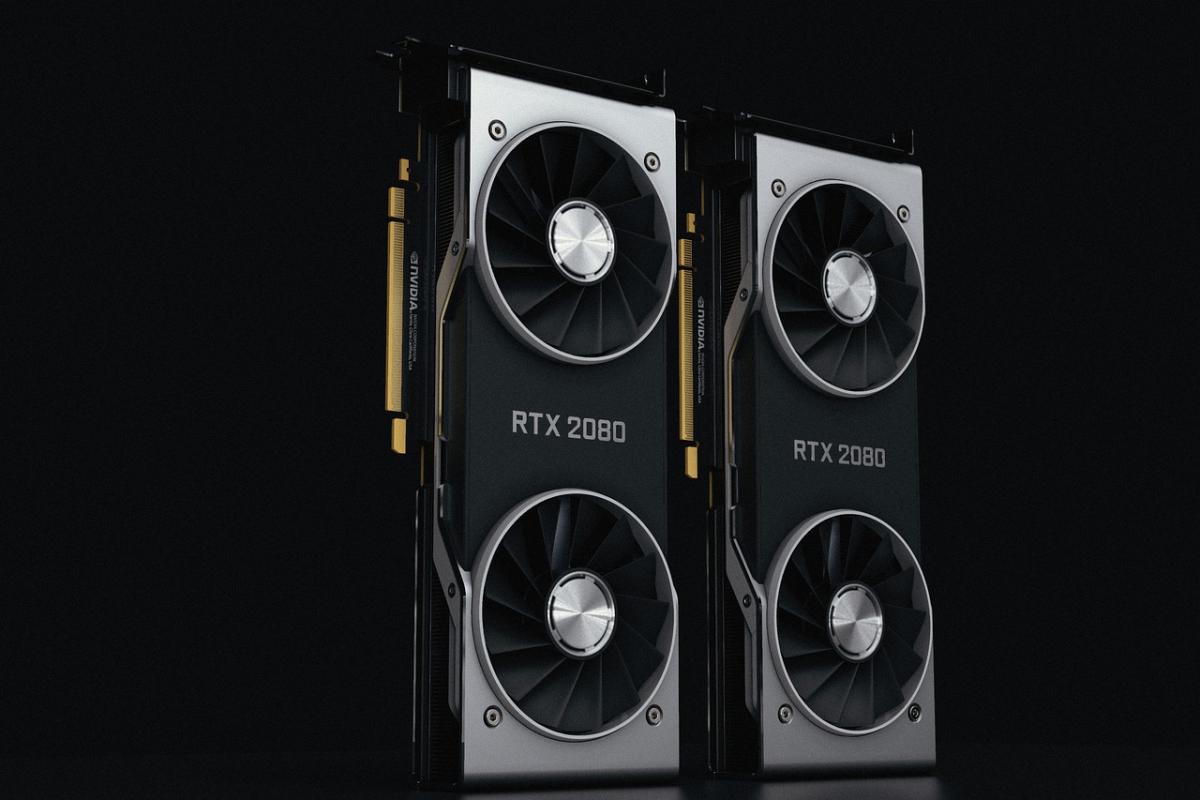
Multi‑GPU configurations offer significant potential for boosting graphical performance in gaming and content creation. By using two or more GPUs in concert, high‑performance PCs can handle complex visual workloads and render high‑resolution content with enhanced speed.
When building a multi‑GPU system, it is essential to ensure that your motherboard and power supply can support the additional GPUs. Multi‑GPU setups require robust cooling, redundant power delivery, and careful attention to PCI Express lane distribution to prevent bottlenecks. Compatibility with multi‑GPU technologies—be it through proprietary bridging or open‑standards—plays a vital role in system stability.
Configure software settings to distribute graphical processing evenly across GPUs. Fine‑tuning driver settings and using dedicated benchmarking tools helps in identifying any performance disparities. Adequate cooling solutions, including supplemental case fans and, if necessary, liquid cooling loops, ensure that all GPUs maintain optimal thermal levels during peak operation.
Achieving balanced performance in multi‑GPU configurations requires careful planning, effective component integration, and continuous optimization. With the right hardware selection and system tuning, you can unlock tremendous graphical power that meets the demands of modern high‑performance applications.
**SEO Keywords:** multi‑GPU configurations, high‑performance PC, GPU balancing, PCI Express lane distribution, multi‑GPU optimization, advanced gaming, graphical performance, system cooling, power delivery, GPU driver tuning
Mastering Multi-GPU Configurations: The Ultimate Guide to Unleash Graphical Power
Multi-GPU configurations offer unparalleled potential for boosting graphical performance in both advanced gaming and professional content creation. By harnessing two or more graphics cards in harmony, high-performance PCs can tackle ultra-detail settings, real-time ray tracing, and massive rendering workloads with remarkable speed. This comprehensive guide dives deep into every facet of building, optimizing, and maintaining a multi-GPU rig to ensure you maximize graphical performance and system longevity.
1. Why Go Multi-GPU?
- Dramatically higher frame rates at 1440p, 4K, or multi-monitor setups
- Accelerated render times in Blender, DaVinci Resolve, and other creative software
- Enhanced compute throughput for GPU-accelerated simulations and AI workloads
- Future-proofing by adding cards incrementally as budgets allow
The ability to scale performance by adding a second or third GPU makes multi-GPU configurations an enticing proposition for enthusiasts and professionals alike.
2. Choosing the Right Multi-GPU Technology
Compatibility and support vary across different multi-GPU frameworks:
| Technology | Vendor | Bridge Type | Pros | Cons |
|---|---|---|---|---|
| NVIDIA SLI | NVIDIA | NVLink bridge (modern) or ribbon | Excellent game support (older titles) | Limited to same-model GPUs, vendor-locked |
| AMD CrossFire | AMD | Ribbon cable (older) or implicit | Open to multiple vendors (older GPUs) | Phasing out in new drivers |
| Open-Standards | Multi-vendor | None (handled in driver/software) | Flexible pairing across brands | Less mature driver optimizations |
| NVIDIA NVLink | NVIDIA | High-bandwidth bridge | Superior bandwidth vs SLI | Premium cards only, added cost |
Select the framework best supported by your target applications and GPU lineup. Proprietary bridging often delivers tighter synchronization, but emerging open-standards promise broader compatibility going forward.
3. Hardware Foundations
Motherboard & PCI Express Lane Distribution
A robust motherboard lays the groundwork for balanced GPU performance. Key considerations:
- Dual (or more) PCIe x16 slots rated at PCIe 4.0 or 5.0
- CPU/chipset offering enough PCIe lanes (e.g., AMD TRX40, Intel X299)
- BIOS support for Above 4G Decoding and resizable BAR
| Slot Configuration | PCIe Gen4/5 Bandwidth | Optimal Use Case |
|---|---|---|
| x16 | Full x16 (16 GB/s per lane Gen4, 32 GB/s Gen5) | Single-GPU peak performance |
| x8 / x8 | Balanced dual-GPU | Dual cards with minimal bottleneck |
| x16 / x8 / x8 | Triple-GPU scalability | Workstations with three GPUs |
Power Supply Unit (PSU)
Multi-GPU builds demand robust power delivery:
- Calculate total GPU TDP + 30% headroom
- Choose a quality unit (80 Plus Gold or higher) with multiple 8-pin GPU connectors
- Verify strong +12 V rail stability
Example: Two 300 W GPUs + 150 W CPU + 100 W system = 850 W. A 1 000 W PSU is recommended for safe headroom.
4. Advanced Cooling Strategies
High-performance PCs with multiple GPUs generate substantial heat. Effective thermal management is non-negotiable:
- Supplemental case fans directed at GPU intake zones
- GPU-only liquid cooling blocks or a custom loop covering all cards
- Thermal straps or heatsinks on power delivery components
- Intake fans pulling cool air directly onto GPU fans or radiators
- Exhaust fans at the rear/top to evacuate hot air efficiently
- Temperature monitoring and adjustable fan curves via software
5. Power Delivery and Connector Management
Consistent voltage under load prevents stability issues:
- Use dedicated PCIe power cables; avoid daisy-chaining adapters
- Verify connector seating and cable lengths to minimize resistance
- Monitor 12 V rail voltage under stress to detect droop
Many enthusiast motherboards include onboard voltage read-points you can probe to ensure clean power to each GPU.
6. BIOS & Firmware Optimizations
Unlock the full bandwidth and stability of your multi-GPU rig:
- Enable Above 4G Decoding to support large GPU memory spaces
- Set PCIe slots to Gen4/5 rather than Gen3 (if supported)
- Update motherboard BIOS to the latest version for compatibility fixes
- Flash GPU firmware when vendors release stability or performance patches
These tweaks reduce bottlenecks at the hardware-interface level.
7. Software Configuration & GPU Driver Tuning
Even perfectly installed GPUs need driver-level tuning to perform optimally:
- Install the manufacturer’s latest WHQL-certified drivers.
- Enable multi-GPU mode (SLI, NVLink, CrossFire, or software-level DirectX/Vulkan multi-adapter).
- In NVIDIA Control Panel or AMD Radeon Software:
- Adjust Power Management Mode to “Prefer Maximum Performance.”
- Synchronize GPU clocks and memory speeds if possible.
- Create application-specific profiles for advanced gaming or rendering tasks.
- Use GPU driver tuning tools (e.g., MSI Afterburner, ASUS GPU Tweak) to:
- Fine-tune voltage/frequency curves for each card.
- Set consistent fan curves to keep all GPUs at similar temperatures.
- Lock power limits to prevent one card from outpacing the others.
This level of driver and firmware harmony ensures that every millisecond of GPU time is leveraged effectively.
8. Performance Benchmarking & Validation
Regular benchmarking pinpoints bottlenecks and validates optimization efforts:
- Synthetic tools: 3DMark Port Royal, Unigine Heaven, Superposition
- Real-world tests:
- 4K gaming at max settings in Cyberpunk 2077, Flight Simulator
- GPU-accelerated render in Blender or V-Ray
- Metrics to track:
- Average FPS and Frame-Time Variance
- GPU utilization percentages per card
- Power draw and thermal headroom
Aim for at least 65–75% scaling per additional GPU. Lower scaling indicates throttling due to PCIe lane limits, driver overhead, or CPU bottlenecks.
9. GPU Balancing & Load Distribution
Uneven workloads can waste GPU potential. Balance them by:
- Ensuring identical GPU models (same core/memory clocks, VRAM size)
- Matching driver versions exactly across cards
- Using explicit multi-adapter APIs (DirectX 12, Vulkan) in supported applications
- Manually configuring GPU affinities in your OS or rendering software
Proper balancing reduces micro-stutter and maximizes aggregate throughput.
10. Troubleshooting Common Multi-GPU Issues
Even the best-planned systems can encounter hurdles:
- Blank display or POST failures:
- Reseat GPUs, check risers, test slots individually.
- Driver crashes or “TDR” errors:
- Roll back to a stable driver version, enable TDR tweaking in registry.
- One GPU at 100% while others idle:
- Verify multi-GPU mode is active in control panels, adjust affinity in Windows Task Manager.
- Extreme thermal throttling:
- Inspect fan curves, reseat thermal pads on GPUs, improve case airflow.
A systematic approach—isolating hardware, software, and airflow—resolves most issues swiftly.
11. Future-Proofing & Upgrade Pathways
To keep your multi-GPU investment relevant:
- Choose motherboards with PCIe 5.0 x16 support for next-gen GPUs
- Invest in a modular PSU that scales to higher wattages
- Opt for water-cooling blocks compatible with multiple GPU form factors
- Monitor emerging open-standard multi-GPU frameworks beyond proprietary bridges
This foresight allows incremental upgrades—drop in a new GPU without rewriting your cooling or power plans.
12. Cost-Benefit Analysis
| Factor | Single-GPU Build | Dual-GPU Build |
|---|---|---|
| Raw Performance Gain | Baseline | +50%–80% (varies by software support) |
| Total System Cost | Lower | +40%–60% extra GPU + supporting hardware |
| Power Consumption | Moderate | High (add 100–300 W per extra GPU) |
| Cooling Requirements | Standard air/liquid setup | Advanced airflow or custom loop |
| Upgrade Flexibility | Limited to one slot | Multi-slot scalability |
While multi-GPU rigs carry higher upfront and operational costs, the raw performance uplift justifies the investment for power users and studios.
13. Case Study: 4K Multi-GPU Rendering Workflow
A VFX studio tests dual RTX 4090 cards in a PCIe 5.0 x8/x8 configuration:
- Render times for a 4K animation dropped from 60 minutes (single GPU) to 35 minutes (dual GPU).
- GPU utilization plateaued at 92% on both cards.
- System power draw averaged 1 100 W under load, managed by a 1 400 W platinum PSU and 360 mm custom loop.
Results demonstrate near-ideal 85% scaling, attributing gains to high-bandwidth lanes, balanced cooling, and driver-level NVLink synchronization.
Conclusion
Achieving peak graphical performance through multi-GPU configurations is a blend of careful hardware selection, meticulous power and cooling design, and continuous software tuning. From PCI Express lane distribution and power delivery to GPU driver tuning and thermal management, every detail matters. With disciplined benchmarking, troubleshooting, and future-proof planning, you can build a high-performance PC that scales gracefully—delivering breathtaking frame rates, rapid render times, and robust compute throughput for the most demanding modern applications.
Embark on your multi-GPU journey equipped with this guide, and unlock the next level of advanced gaming, content creation, and graphical computation. Continuous learning—tracking new driver releases, next-gen PCIe standards, and open-standard multi-GPU frameworks—will keep your system at the cutting edge of visual fidelity and performance optimization.